
What is the pro rata method?
Many companies use the Pro Rata for earnings curves in the F&I and warranty industries. Also called the “straight-line” method, Pro Rata evenly distributes revenue over the life of a contract, regardless of claim frequency or risk exposure. It’s simple, familiar, and often chosen when administrators or insurers want a conservative, time-based approach to revenue recognition.
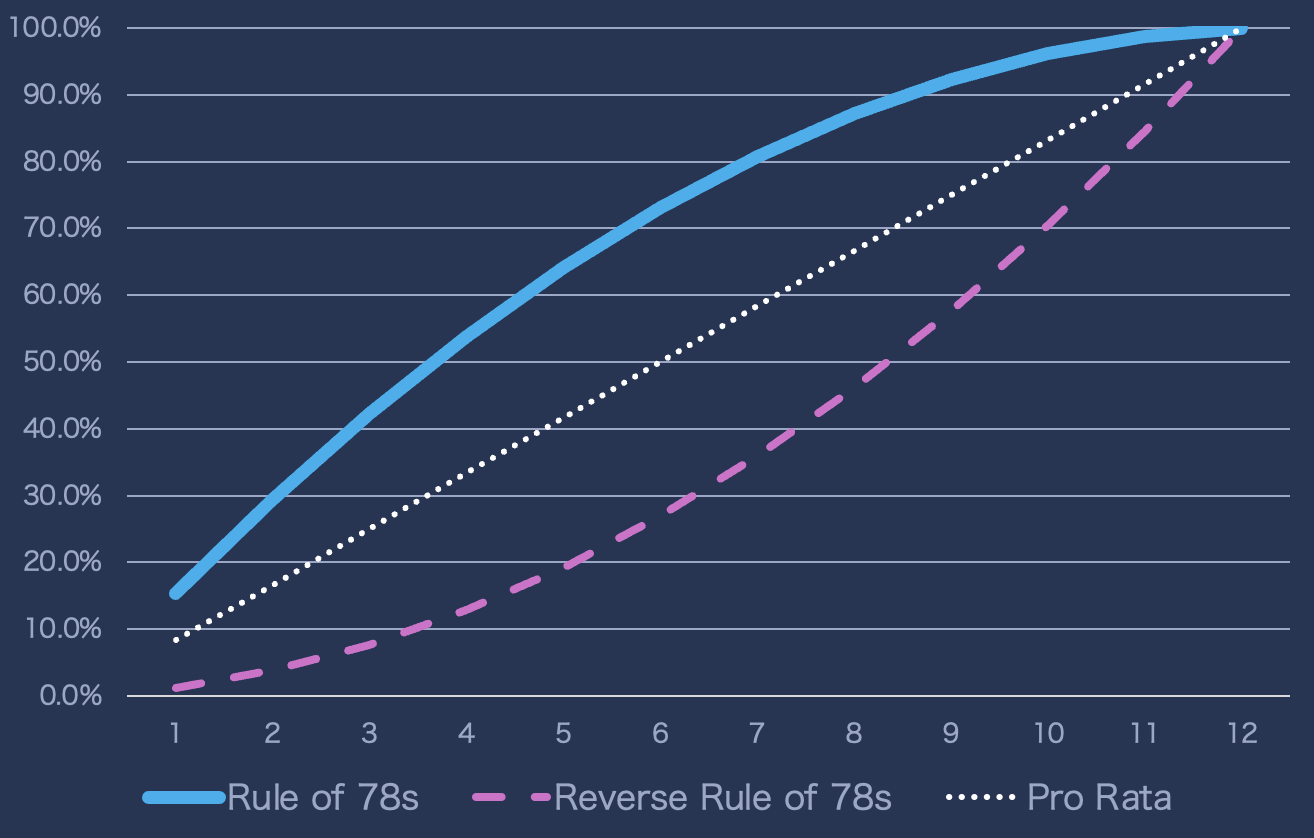
How does the pro rata for earnings curves work?
In using pro rata for earnings curves, each month of a contract earns an equal portion of the total revenue. For example, a 12-month contract earns 1/12 of the revenue per month (8.33%), while a 36-month contract earns 1/36 each month (2.78%).
This approach assumes that the customer receives equal value every month, and that the risk is evenly spread throughout the contract—regardless of actual usage or claims patterns.
Example: 12 month contract
|
Month
|
Weight
|
% of Revenue Earned That Month
|
|---|---|---|
| 1 | 1/12 | 8.3% |
| 2 | 1/12 | 8.3% |
| 3 | 1/12 | 8.3% |
| ... | ... | ... |
| 12 | 1/12 | 8.3% |
Why Use pro rata?
- It's easy: Extremely easy to calculate, implement, and audit.
- Conservative default: Often used when claims data is insufficient or when a standardized method is preferred.
- Regulatory acceptance: Commonly accepted by auditors and regulators for time-based exposure modeling.
- Predictable revenue profile: Straight-line earnings simplify forecasting and financial modeling.
What are the downsides to using pro rata for an earning curves?
- Ignores real-world claims behavior: Many F&I products, such as VSCs and tire & wheel protection, have higher claims frequency early in the contract.
- Can distort loss ratios: Using a flat earnings curve with front-loaded claims inflates reported loss ratios—making performance look worse than it actually is.
- Limits valuation upside: Buyers and investors may undervalue the business if inflated loss ratios are not backed by aligned earnings curves.
- One-size-fits-all: Doesn’t reflect product-specific or region-specific behavior, reducing precision in reserving and deal structuring.