
July 2025 Home Sales: What Home Warranty Providers Need to Know
The housing market isn’t crashing—but it is shifting. Slowly. Unevenly. And for home warranty providers, July 2025 offers critical signals about where demand is likely to rise, where lead quality is improving, and where to allocate marketing and service resources next.
While national home sales totals held steady compared to June, the underlying details show two very different stories. The new construction market is picking up share by offering incentives and price flexibility. Meanwhile, existing homeowners are largely staying put—a trend that continues to depress resale activity and reduce buyer churn.
Let’s dig into what the July numbers say about inventory, buyer behavior, and regional shifts—and why it all matters for your business.
New vs. Existing Sales: Two Markets, Two Strategies
Total sales activity in July 2025 was modest, but the paths diverged:
- New home sales (SAAR): 652,000, down 0.6% from June and 8.2% from July 2024
- Existing home sales (SAAR): 4.01 million, up 2.0% from June and 0.8% from July 2024
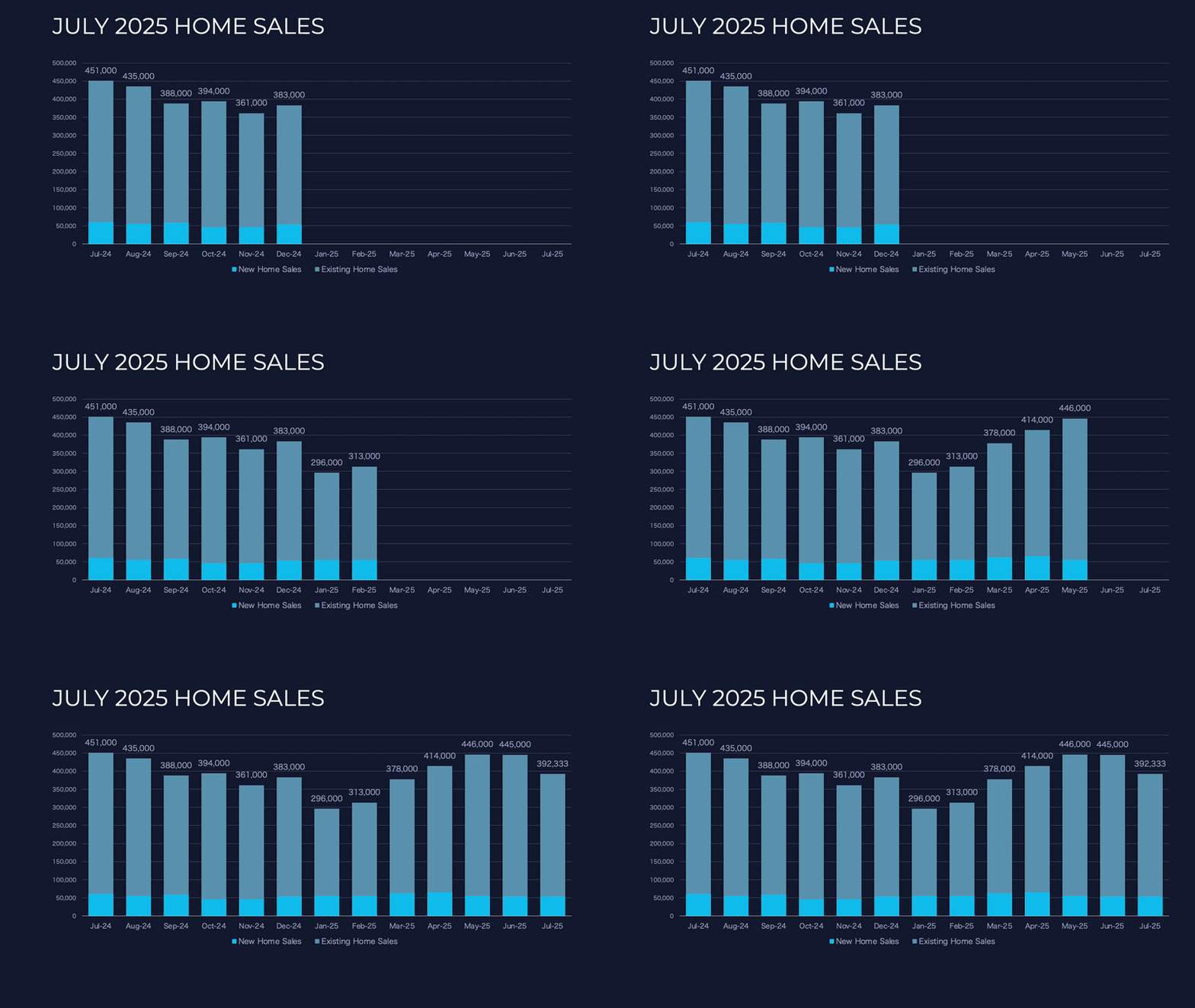
- Actual existing home sales: 388,000 in July, down slightly from June
Homebuilders are doing what resale homeowners can’t: adjusting prices and offering concessions. That’s allowing them to win a greater share of first-time buyers and move-up buyers—segments with high attachment rates for home warranties.
Meanwhile, prices for existing homes continue to defy logic. With the median existing home price now at a record $422,400 (up just 0.2% YoY), many would-be buyers are still priced out—leading to lower conversion from real estate lead sources.
| Metric | New Homes | Existing Homes |
|---|---|---|
| SAAR Sales Volume | 652,000 | 4.01 million |
| Actual Monthly Sales | ~54,333 | 388,000 |
| Median Sale Price | $403,800 | $422,400 |
| YoY Price Change | -5.9% | +0.2% |
| Inventory | 499,000 | 1.55 million |
| Months of Supply | 9.2 months | 4.6 months |
Inventory Is Rising—But Not Due to Seller Confidence
Inventory rose sharply again in July—up 24.8% year-over-year. But this isn’t a flood of new listings. It’s the result of homes sitting longer on the market. Median days on market jumped to 58.
This is crucial context for lead gen and outreach: more listings doesn’t mean more buyers. In fact, new listings are only up 7.3% YoY and have declined since April. Sellers are hesitant. Many are delisting instead of lowering prices.
The implication? There’s more noise in the system—but not necessarily more conversion-ready buyers. Your lead sources may show higher volume, but actual sales activity remains tight.
Builders Are Driving Volume—And Warranty Attachment
New construction is where the action is.
- 38% of builders cut prices in July (up from 31% in 2024)
- 62% offered closing cost help or mortgage rate buydowns
This creates an opportunity for home warranty providers:
- Builders need warranty partners to sweeten the buyer experience
- New buyers are prime candidates for bundled warranty products
- Higher builder share = higher attachment potential
If you’re not already plugged into builder channels or new home lead funnels, you’re missing out on the segment doing the most deals right now.
Affordability Still Shapes Demand
- 30-year mortgage rate: ~6.75%
- Required income to buy a median home: Still up ~40% from pre-COVID
Pending sales dropped 3% YoY in July. Many traditional mortgage-bound buyers remain sidelined.
But two groups are still buying:
- Cash buyers (31% of existing-home transactions in July)
- Buyers responding to builder incentives
These groups are key for home warranty providers because:
- Cash buyers often have discretionary income for warranty add-ons
- Builder buyers are already interacting with structured sales teams open to bundling products
Regional Variations: Where to Focus
Some areas are booming. Others are stalling. Smart warranty providers will adjust marketing and ops accordingly.
| Region | Inventory YoY | Price YoY | Days on Market |
|---|---|---|---|
| West | +32.5% | -0.8% | +10 days |
| South | +25.4% | -0.6% | +8 days |
| Midwest | +18.1% | -0.3% | +3 days |
| Northeast | +15.5% | +0.2% | +2 days |
- West & South: Inventory back to (or above) pre-COVID norms. Price softening + longer time on market = more opportunity for direct-to-consumer outreach.
- Midwest & Northeast: Still inventory-starved. Faster sales, tighter margins, harder for outbound to convert.
State Highlights for Warranty Targeting
Texas:
Surging inventory (+31%) and declining prices in major metros like Austin and Dallas. New home sales down. Market turning buyer-friendly.
Florida:
Buyer’s market in SWFL. 11-month supply. Statewide median price: $410,000 (-1.7% YoY). Sales down 2.8% YoY. Warranty offers have strong negotiation appeal.
California:
Sales down 4.1% YoY. Median price: $884K. Inventory at a 66-month high. Warranty upsell works best on high-ticket homes.
New York:
Tight supply. Prices up. Days on market quick. Warranty attachment will require deeper agent relationships.
Ohio & Illinois:
Steady Midwest demand. Low inventory but decent price growth. Focus on agent partnerships and first-time buyers.
Looking Ahead: The Back Half of 2025
- No major interest rate drop expected
- Builders will continue to drive volume
- Existing-home turnover will stay low
- Regional divergence will increase
National sales may look flat, but markets like Texas, Florida, Arizona, and Nevada are transitioning toward buyer leverage. That’s where your team can win business.
What to Do Now
If You Market Direct-to-Consumer:
- Focus on metros with rising inventory and longer days on market
- Retarget builder buyers and price-sensitive move-ups
If You Work with Real Estate Agents:
- Double down in Midwest and Northeast where deals are more competitive
- Train agents to position warranties as price insurance for nervous buyers
If You Partner with Builders:
- Offer warranty bundling and closing incentives
- Position warranty as a value-add in slower-selling communities
Final Word: Don’t Follow the National Numbers. Follow the Action.
July’s housing market showed us that the surface numbers barely matter anymore. The opportunity lies in targeting submarkets where inventory is rising, builder deals are flowing, and buyers still have leverage.
For home warranty providers, that means recalibrating marketing, channel mix, and pricing models to match how and where the market is really moving.
Stay close to the data. Stay close to your builders and agents. And lean into the new construction trend—because that’s where the volume is.
Sources:
- U.S. Census Bureau & HUD (New Home Sales, July 2025)
- National Association of REALTORS® (Existing Home Sales, July 2025)
- Realtor.com, Redfin, Zillow, Florida Realtors, California Association of REALTORS®, Texas Real Estate Research Center, and others